


What Color Of Clothing Is Cooler To Wear in Summer?
"Wearing white in summer is the most sunscreen and cool", is actually a typical cognitive misconception.
Under the same fabric conditions, the darker the color of the clothing, the better the sunscreen effect. Red is better than black, and black is better than orange. Dark-colored clothing can absorb a large amount of ultraviolet rays from sunlight, reducing direct exposure of the skin to ultraviolet rays from the source and providing better blocking effect. Light-colored clothing, although it dissipates heat quickly and feels cooler on the body, has extremely poor ability to block ultraviolet rays. Prolonged outdoor exposure to the sun can easily cause sunburn.
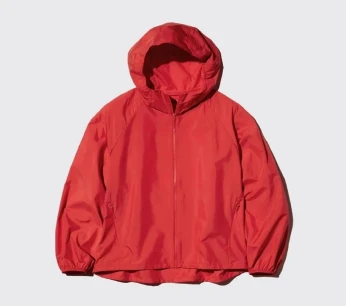
For long-duration outdoor activities, it is recommended to choose red clothing.
Absorbing ultraviolet rays: Red light has a longer wavelength and can absorb a large amount of ultraviolet rays from sunlight. Ultraviolet rays are the shortest wavelength rays in the solar spectrum, located furthest from the red spectrum. They are easily absorbed by red visible light, which has the longest wavelength. Therefore, wearing red clothes can absorb and filter out more solar ultraviolet rays, thereby reducing the damage to the skin caused by ultraviolet rays.
Reflective thermal radiation: in addition to absorbing ultraviolet rays, red clothes can also reflect the red and infrared rays of thermal radiation. This means that red clothes can not only effectively reduce the damage of ultraviolet rays to the skin, but also help the body reflect some heat, making people feel cooler.
Wearing less clothing in summer does not necessarily mean better heat protection. Only when the skin temperature is higher than the ambient temperature can the skin conduct and dissipate heat. When the external temperature reaches or exceeds the body surface temperature, the skin cannot actively dissipate heat. Instead, it absorbs heat from the outside, causing the body temperature to rise, making people more prone to heatstroke.
Therefore, when choosing clothing styles, loose-fitting is preferable to tight-fitting. Tight-fitting clothing clings closely to the skin, allowing more light to penetrate, but also creating more "sunscreen gaps". Loose-fitting clothes can form an air insulating layer between the body and the fabric, providing better sunscreen protection and facilitating ventilation and heat dissipation, effectively reducing the feeling of stuffiness.

In addition, can the fabric itself provide sun protection? The answer is yes, but the difference between different fabrics is so significant that you won't believe it.
Among natural fibers, wool and silk have superior sunscreen capabilities compared to cotton, which has an UPF of only 2~5 and provides almost no sun protection. Therefore, "pure cotton sunscreen clothing" does not conform to the logic of sun protection. Among chemical fibers, polyester has the strongest sunscreen capability. Although nylon's UV protection ability is not as good as polyester, nylon naturally has a cool feeling. Combined with its UV protection ability, it is more suitable for making sunscreen clothing than polyester overall.


